
Middleton is an international primary school in Singapore for children in Grade 1 to Grade 5, aged 6 to 11, on our Tampines campus. We offer the inquiry-based International Primary Curriculum (IPC) in Singapore, aligned with The UK National Curriculum for English and the globally recognised Singapore Maths. Classes are capped at 28 children.
We admit children on merit and support learners who are new to English. Our primary classes are open to expatriate and local families*.
*Singaporeans children can only attend International schools up to Kindergarten 2 (K2). MOE exemption would be required for continued attendance from Primary 1/Grade 1.

International Primary Curriculum
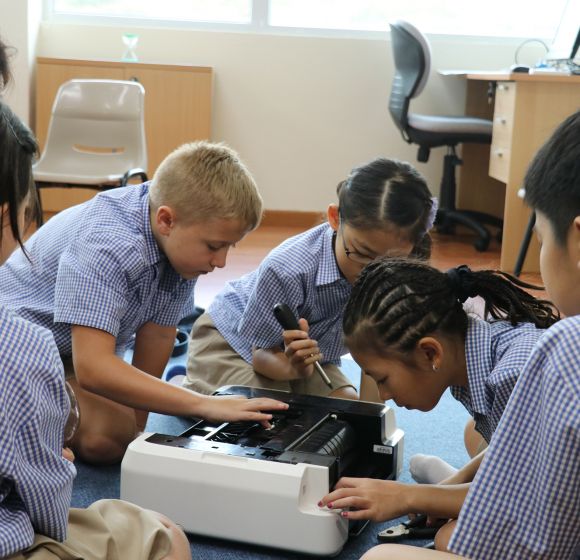
The International Primary Curriculum (IPC) is a thematic curriculum for children aged 5 to 11, published by Fieldwork Education. Rather than teaching each subject against its own separate syllabus, the IPC organises learning into units of work that carry several subjects at once, each with its own subject, personal and international goals. Middleton teaches it from Grade 1 to Grade 5.
The IPC is a comprehensive curriculum based on the English National Curriculum adapted for international primary schools, with reference to an inquiry-based approach to learning. It has a clear learning process and specific learning goals, designed to appeal to children's interests and help them learn more about the world. First introduced in 2000, the IPC is now taught in over 1,000 IPC schools in more than 90 countries, including more than 10 IPC schools in Singapore.
The IPC Learning Goals
At the heart of the IPC curriculum is a set of rigorous and holistic subject, personal and international learning goals.
Subject Goals - cover the knowledge, skills and understanding that children should learn in each subject
International Goals - help learners move towards a national, international, global and intercultural perspective on the world around them whilst developing the capacity to take action and make a difference
Personal Goals - underpin the individual qualities and dispositions that learners need to thrive in an ever-changing world. The eight IPC personal goals include adaptability, cooperation, respect, thoughtfulness, communication, morality, enquiry and resilience

IPC Units Of Work
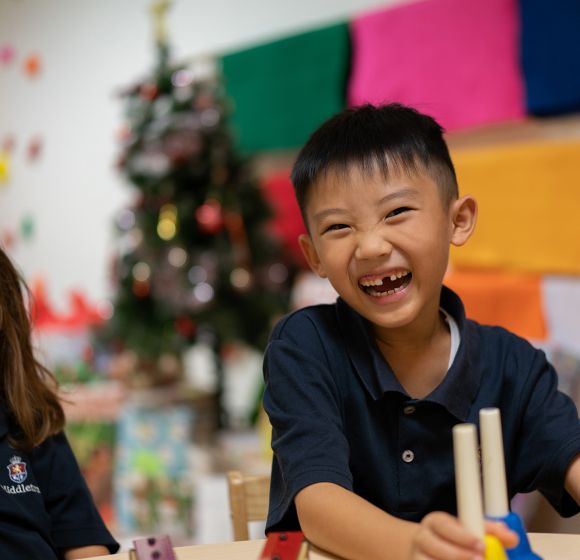
The units of study within the IPC curriculum take on a thematic approach, weaving together different learning goals and subjects in an integrated and logical way. It can be adapted to children's interests and level of understanding to ensure that learners take ownership and are enthusiastic about their learning. These enable elementary school-aged primary-aged learners to make meaning of their new knowledge, show their skills and apply their understanding to the real world.
Singapore Maths At Middleton
Singapore Maths has been well-received by the international community. At present, more than 40 countries and regions worldwide have adopted the Singapore Maths curriculum and teaching methods, including US, UK, France and Australia. We adopt Singapore Maths into our curriculum to provide learners with the knowledge, skills and understanding to prepare them for success in the 21st Century.
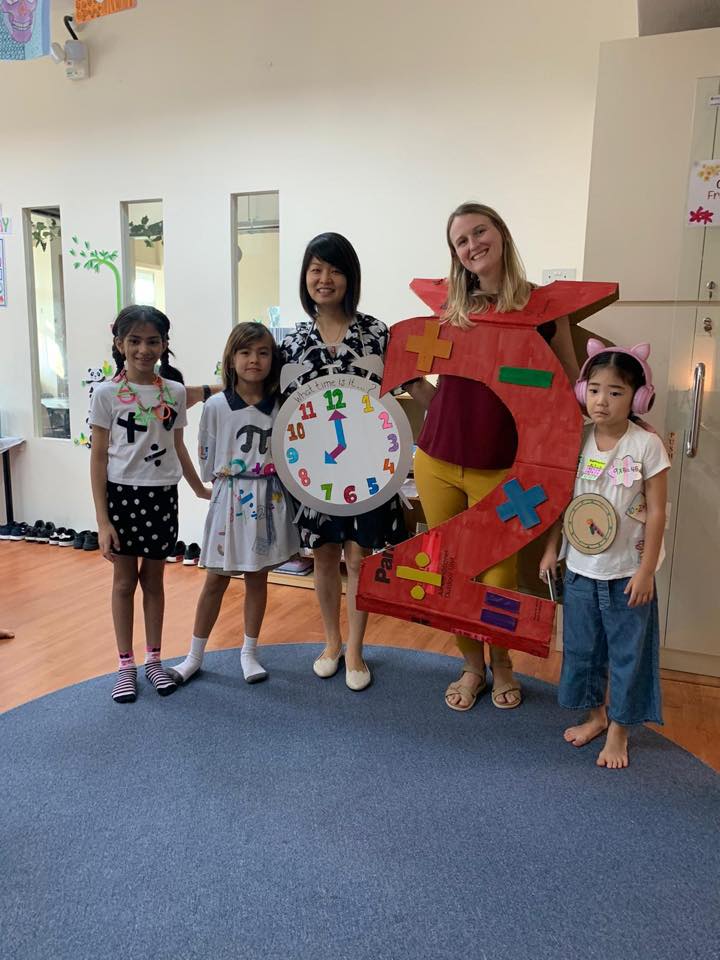
New maths arrives in three stages, and a Grade 2 or Grade 3 class moves through all three inside a single concept. Children start with objects they can move with their hands, counters or blocks. They then draw the same problem as a picture or a bar model. Only after both do they write it in numbers and symbols. A child struggling with the second or third stage can drop back a stage to strengthen their fundamentals.
We use real-life applications to develop our students' thinking and solidify their understanding. Instead of simply memorising formulas, we equip students with the ability to use mathematical knowledge to solve problems in their lives.
One main characteristic of Singapore Maths is using heuristics to help learners decide the best way to solve a problem. The process of learning and applying heuristics helps develop children's critical thinking and problem-solving abilities. These are essential skills to ensure our students are well prepared for the next steps of their education journey.
Benefits of IPC
Parents comparing primary programmes usually want to know how the IPC differs from the IB Primary Years Programme (PYP) and Cambridge Primary. All three are inquiry-friendly and all three feed recognised secondary pathways. The differences lie in their organisation, inquiry, assessment and portability.
Organisation
The IPC curriculum teaches through thematic units that combine subjects around one topic. The PYP works similarly, around transdisciplinary themes. Cambridge Primary keeps subjects separate, with its own frameworks for English, Mathematics and Science.
Inquiry
The IPC supplies the inquiry ready-built, with a set process for every unit from entry point to exit point. The PYP expects each school to design its own programme of inquiry. Cambridge Primary leaves the approach up to the school.
Assessment
IPC progress is judged by teachers against the unit goals, with no external primary examination. The PYP is also internally assessed. Cambridge Primary offers optional Checkpoint tests at the end of Stage 6, marked by Cambridge examiners.
Portability
Over 1,000 schools across more than 90 countries teach the IPC, so a mid-year move often lands your child in a familiar unit structure.
We teach the IPC because it gives a child a repeatable process for learning, not only a list of things to know.
Subjects Your Child Will Study
Subjects at an international primary school can look like a timetable of separate lessons. At Middleton they are planned as one curriculum, so a science idea and a writing task often belong to the same IPC unit.
| Subjects | |
|---|---|
| English | Social Studies |
| Mathematics | Performing Arts |
| Information Communication Technology | Library |
| Visual Arts | Supervised Study |
| Personal Social and Physical Education | Additional English (Elective)^ |
| Science | Additional Language: Chinese, French, Hindi (Elective) * |
* Compulsory in Grade 1 and optional for Grades 2 to 5, charged separately for Grades 2 to 5. ^ Required based on English proficiency.
Class Sizes, Teachers and Learning Support
Primary classes at Middleton are capped at 28 children, and each class from Grade 1 has one homeroom teacher, so the primary ratio does not exceed 28 children to a teacher. Four classes per grade level is the planned maximum, which the Academic Board can raise when demand requires it.
Our primary teachers are qualified educators recruited from Singapore, the United Kingdom, the United States, India, Australia and China. Not every lesson is taught by the homeroom teacher. Physical Education and Additional Language are taken by specialists, as are Art lessons from Kindergarten 2 upwards, so your child works with several teachers each week while keeping one adult who knows them well.
English Support: English as an Additional Language (EAL)
A child who joins Grade 1 with limited English starts in their class on the first day. Every new learner is assessed by their English teacher in the opening weeks, and those who need it join our EAL programme, which for primary learners runs as four 45-minute small-group sessions a week. Intensive EAL doubles that time. The Additional English elective above is how that support sits in a timetable. Some children need one or two terms, others a year or two. EAL is charged separately from course fees.
How We Assess And Report On Your Child's Progress
Children following the IPC curriculum are assessed by their teachers as they work, and there are no external primary examinations at Middleton. Progress is measured against the subject, personal and international goals set for each unit.
Assessment Throughout The Learning Process
Pre-assessment
Assessment starts before a unit does. Teachers pre-assess what a class already knows.
Ongoing evidence
Teachers gather evidence as the work happens, through observation, discussion, projects, written tests and portfolios rather than a single mark.
Standardised benchmarks
Standardised tests in reading, writing and maths run alongside, giving teachers a benchmark to adjust the year's teaching against.
How We Share Your Child's Progress
Regular opportunities for parents to understand, discuss and celebrate learning.
Parent-Teacher Conference
A dedicated opportunity for parents and teachers to discuss the child's progress.
Written Progress Report & Portfolio
Written progress reports are issued in June, with portfolios shared in Term 2.
Next Steps In Learning
A reflection session focused on the child's next steps in learning.
Written Progress Report, Portfolio & Student-Led Conference
Written progress reports and portfolios are shared. Your child also talks you through their own work during a student-led conference.
External Standardised Assessments
Middleton uses the ISA and CAT4 external standardised assessments, charged separately.
Learning Stories From Our International Primary Classrooms
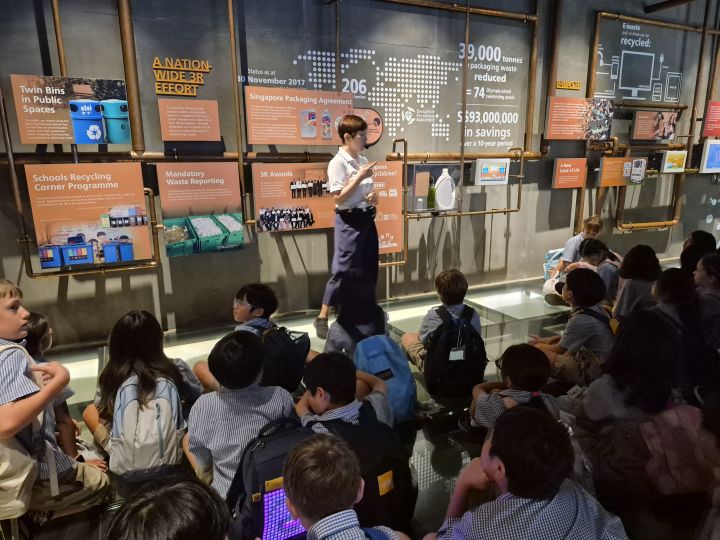
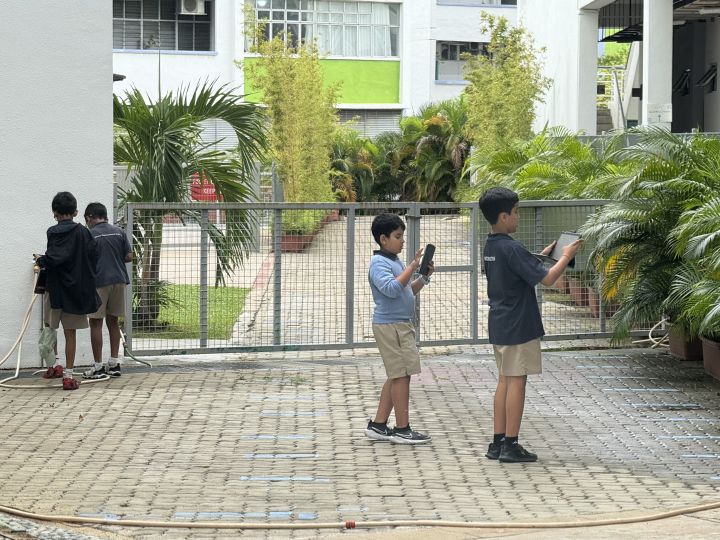
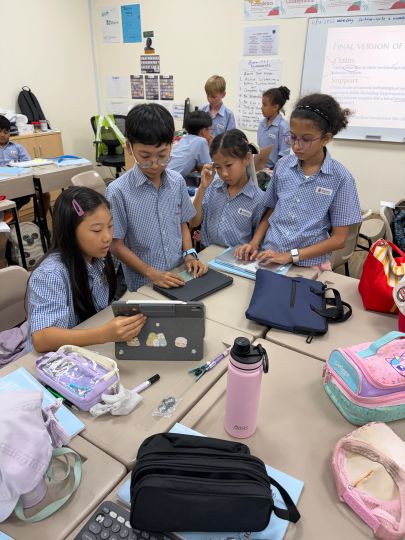
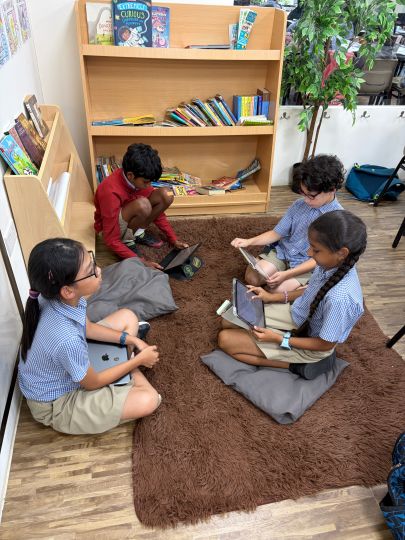
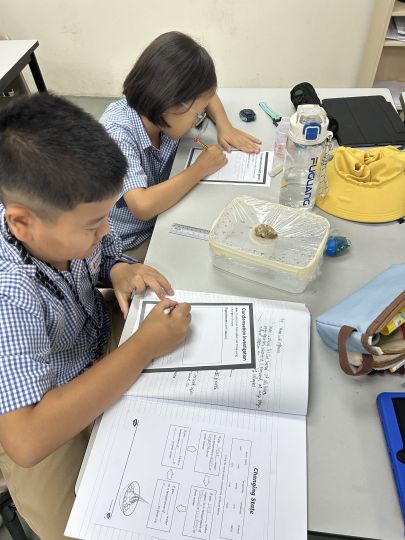
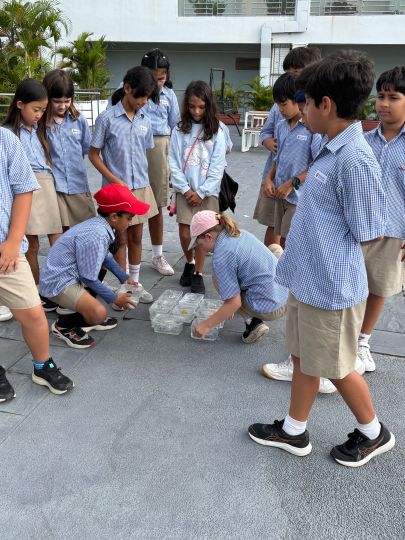
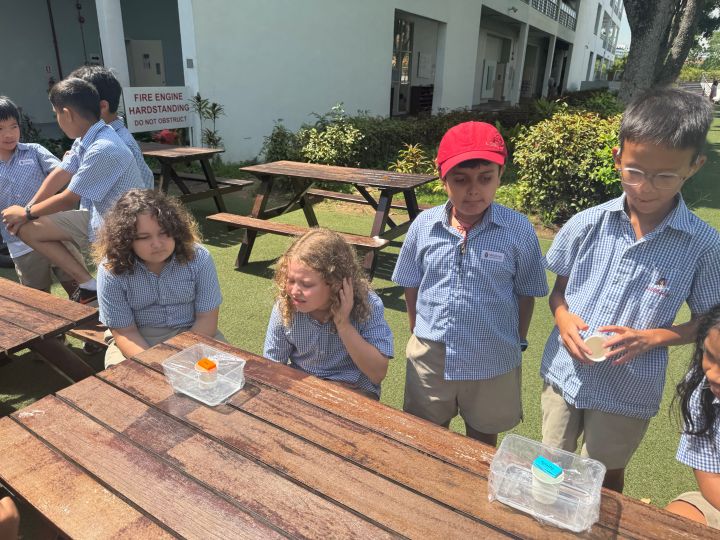
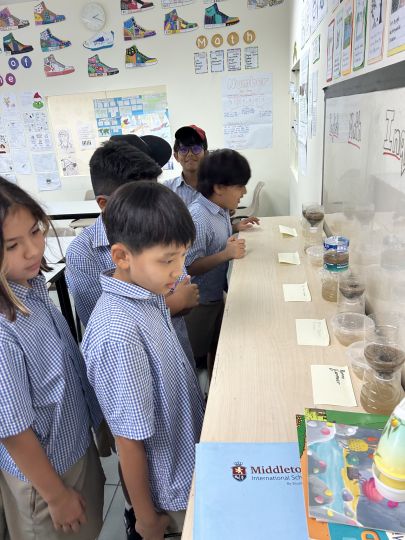
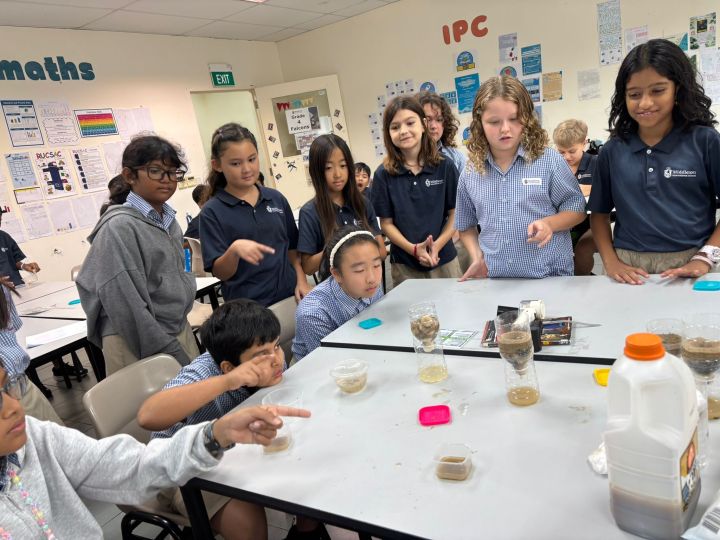
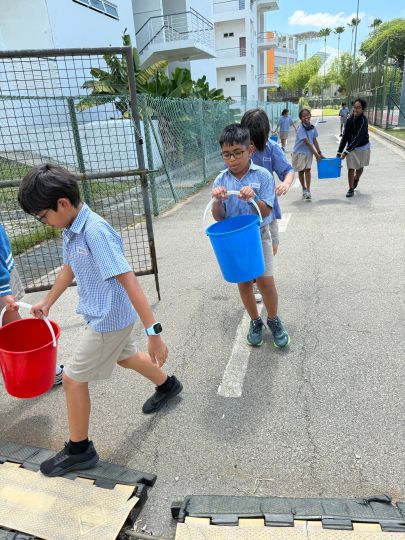
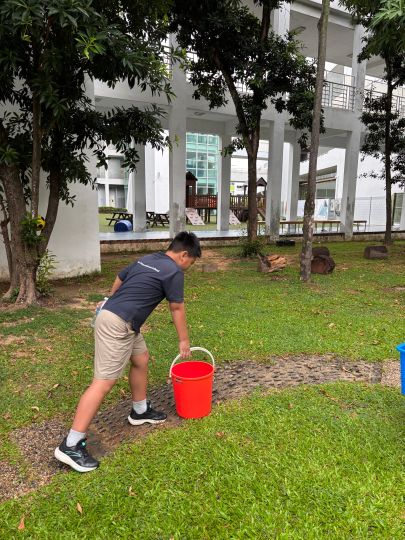
Through inquiry-based learning, we witness our learners’ journey unfold, each step marked by curiosity, exploration, and profound discovery. This documentation of learning stories shows their evolving understanding of the world, capturing their triumphs, insights and growth milestones.

Frequently Asked Questions About The International Primary School Curriculum
The IPC, or International Primary Curriculum, is a thematic curriculum for children aged 5 to 11, published by Fieldwork Education and taught in over 1,000 schools across more than 90 countries. Subjects are taught through units of work built around a single theme, each carrying subject, personal and international goals. Middleton teaches the IPC curriculum from Grade 1 to Grade 5.
Both are inquiry-led, and the difference is how much the curriculum itself supplies. The IPC provides ready-built thematic units with a set learning process and defined goals for each. The IB Primary Years Programme is a framework, so each school designs its own programme of inquiry around six transdisciplinary themes. Neither ends in an external primary examination.
An international primary school in Singapore usually covers Grade 1 to Grade 5 or Grade 6, for children aged roughly 6 to 11. Middleton's Primary Years programme runs Grade 1 to Grade 5, and placement is set by year of birth. A child born in 2019 enters Grade 1 in 2026. Grade 6 begins our Middle Years programme on the same campus.
Yes. Middleton admits children all year round, and course fees are pro-rated from your child's start date. New primary learners are assessed for English in their opening weeks and placed by year of birth. A pre-enrolment assessment applies from Grade 3 and above on a case-by-case basis.
No. Admission to Grade 1 at Middleton is not an English test. Children who need support join the EAL programme, four 45-minute small-group sessions a week for primary learners, and sit with their class for everything else. Intensive EAL doubles that time, and support steps down as proficiency grows.
Course fees at Middleton for 2026 are S$21,760.25 a year for Grades 2 to 5 and S$26,247.12 for Grade 1, both including 9% GST, student insurance and the Fee Protection Scheme.¹ Fees are payable in four instalments across November, February, May and August, and a 10% sibling discount applies from the second enrolled child onwards.
See a full breakdown of our international school fees in Singapore.
¹ 2026 rates, valid for the 2026 academic year. The Grade 1 figure includes the additional language that is compulsory in Grade 1. Non-refundable application fees of S$1,454 apply separately. Additional languages for Grades 2 to 5, EAL and Intensive EAL are charged separately. Full schedule, refund terms, payment modes and dates on our Tampines fees page.